They Are Already Searching for Your Property. The Question Is Whether They Can Find It.
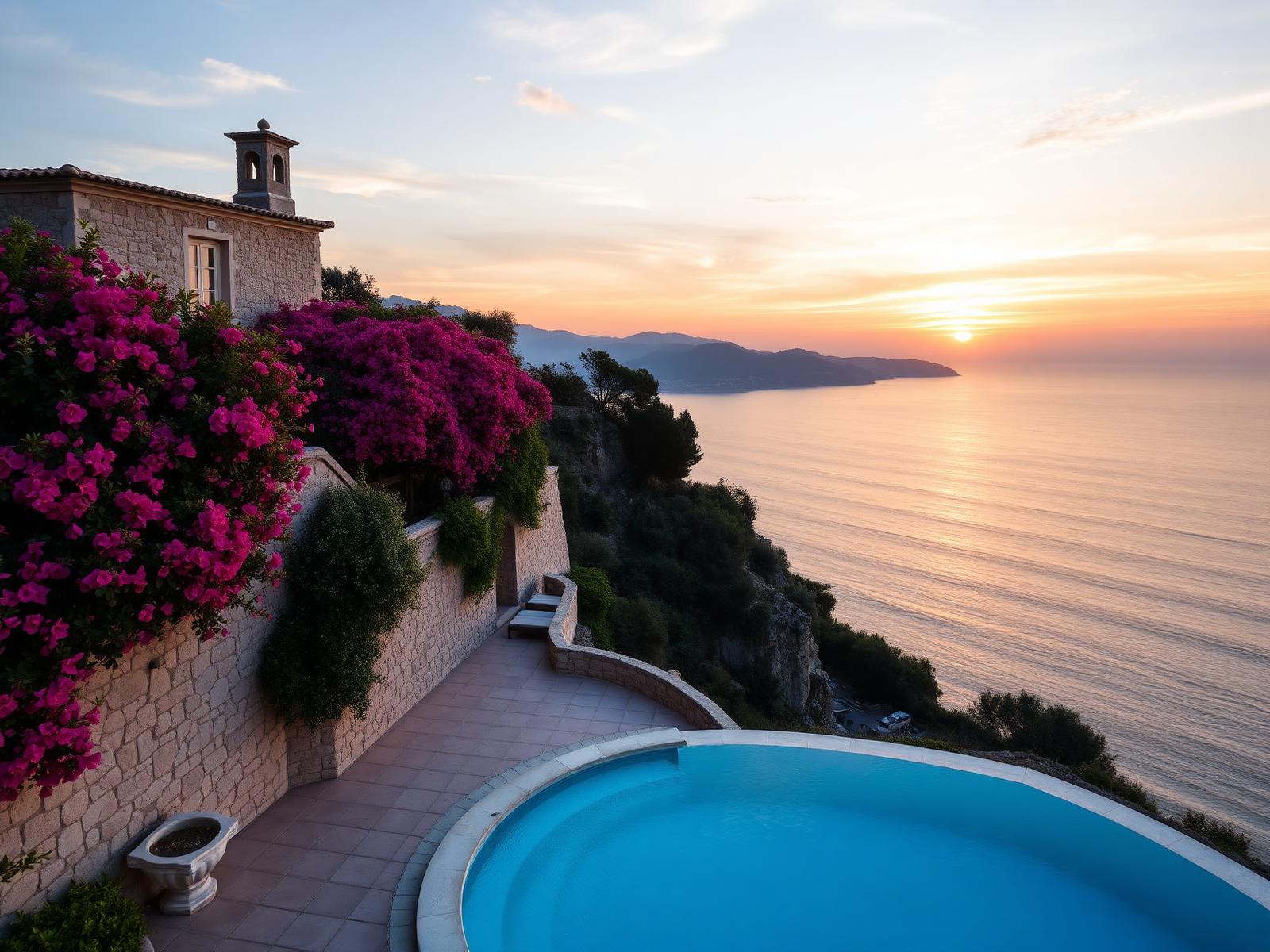
Somewhere right now, a family is planning their Christmas. Not idly — seriously. They have had the conversation, made the decision, agreed that this year is going to be different. No resort. No hotel. A private estate, somewhere extraordinary, for two weeks in December with three generations and enough bedrooms that nobody has to compromise.
They open Google. They type: luxury private estate Aspen Christmas week sleeps twelve.
Your property — assuming it is exactly that — is either in those results or it isn't. The search happened regardless. The family is booking regardless. The only question is whether they find you directly, at your full rate, beginning a relationship that belongs entirely to you — or whether they find you through a platform, at a commission-adjusted total, beginning a relationship that belongs to the algorithm.
That is what luxury short-term rental SEO actually is. Not traffic as a vanity metric. Not rankings for their own sake. The specific, high-intent guests who have already decided they want what you have, and the infrastructure to ensure they find you before they open Airbnb.
The Misconception That Keeps Operators Invisible
There is an assumption that most luxury rental operators carry about search — when they engage with the question at all. The assumption is that broad keyword volume is the goal. That the strategy is to rank for "luxury villa rental" or "vacation rental Cabo" and capture a percentage of that traffic. That SEO is fundamentally a competition for the highest-volume terms, and that winning it means beating Airbnb at its own game.
This is not how the guests who matter actually search. And pursuing it leads operators either to give up — those terms are dominated by platforms and aggregators with nine-figure marketing budgets and domain authority accumulated over two decades — or to optimize for traffic that doesn't convert, which produces the same practical outcome.
The guests worth reaching search with precision. They are not browsing. They know, with considerable specificity, what they want. The searches that convert into $35,000 bookings look like this: oceanfront villa Cabo New Year's Eve sleeps sixteen. Or: private estate with pool and private chef Aspen ski season. Or: beachfront compound Turks and Caicos sleeps fourteen New Year's week. Or: villa rental Tuscany with vineyard and pool late June. These are long-tail queries — lower individual search volume, but carrying purchase intent that is orders of magnitude higher than any broad term. A guest typing the first of those phrases has already decided on Cabo. Has already decided on New Year's Eve. Has already decided they need a private villa for sixteen people. They are not researching. They are acquiring. They are one compelling property website away from making an inquiry.
"I used to think SEO meant competing with Airbnb for broad searches," says one operator managing a ten-bedroom estate in Palmilla, Los Cabos. "When someone finally explained long-tail intent to me, I understood I'd been approaching this completely backwards. I don't need to beat Airbnb. I just need to be the first result when someone types the exact description of my property."
That reorientation — from broad volume to specific intent — is the first and most important shift a luxury operator can make in how they think about search.
What the Right Content Infrastructure Actually Looks Like
Understanding search intent is the conceptual layer. Building the content infrastructure to capture it is the operational one, and it is where the real work lives.
A direct booking website for an ultra-luxury estate is not a digital brochure. Not a landing page with exceptional photography and a booking widget at the bottom. It is a content ecosystem — a set of interconnected pages and articles that, together, establish the site as the authoritative resource on what the property offers and the destination it inhabits. Authority is not claimed through design. It is earned through content depth, specificity, and consistency over time.
Core property pages need to be built around the actual search terms your ideal guests are using — not generic descriptions of what you offer, but dedicated pages that speak directly to specific intent. A seven-bedroom oceanfront estate in Kauai should have pages targeting private oceanfront estate Kauai North Shore, and luxury vacation rental Hanalei Bay, and Kauai villa rental sleeps fourteen with private pool. Each of these is a distinct search intent. Each deserves its own content. Not thin keyword stuffing — genuine, useful information that answers what a searching guest needs to know: the specific qualities of the property, the experience of being there, the practical details that move an interested visitor toward picking up the phone or submitting an inquiry form.
Blog content compounds this authority across the broader destination landscape. A well-researched article about the best private estates for Aspen ski season — genuinely useful, written for someone seriously planning that trip, published on a direct booking website for a property that belongs in that conversation — does two things at once. It earns search rankings for terms your ideal guests are actually using across the planning phase, weeks or months before they have selected a specific property. And it positions your brand as a knowledgeable, trustworthy resource rather than simply a listing. The guest who arrives at your site through that article, and then discovers your property within it, has already been given a reason to trust you before they have looked at a single price point.
Where to eat in Cabo San Lucas with a large private villa group. The best private estates in the Hamptons for a July Fourth week. What to know about renting a private ski chalet in Aspen for Christmas. These articles are being searched by exactly the guests you want, in meaningful volume, and almost none of the individual estate operators who should be capturing that traffic are publishing anything that competes.
The Technical Foundation Most Operators Ignore
Content strategy gets most of the attention. The technical infrastructure that makes content actually perform gets almost none — and it is where well-conceived luxury websites quietly fail to rank.
Page speed is the most immediately impactful technical variable after content quality. Google has been direct about this for years: slow sites rank lower. Full stop. This matters acutely for luxury estate websites, which tend to be image-heavy, visually ambitious, and built by designers whose primary reference point is aesthetic rather than performance. A site that takes five seconds to load on mobile — even a genuinely beautiful one — is being penalized in rankings and losing the visitors who do find it. Both at the same time. The design investment is actively working against the business outcome.
Mobile experience is an extension of this. The family planning their Cabo New Year's is not sitting at a desktop when they start researching. They are on an iPhone during a commute, in the school pickup line, at dinner when someone says should we just start looking at options. If your property website is not flawlessly functional on mobile — not technically responsive, but genuinely excellent in that context — you are losing the moments when high-value bookings actually begin.
Structured data markup — the technical signals that tell Google precisely what a page is about — is absent from the vast majority of luxury rental websites, and the absence is a quiet, persistent drag on performance. Implementing schema for your property type, location, amenities, pricing structure, and availability calendar is not visible work. Nobody sees it. But it communicates directly to search infrastructure in ways that compound over time, particularly as Google's algorithms become more sophisticated in how they surface and interpret property-specific content.
Internal linking — the architecture of how your pages connect to and reinforce each other — matters more than most operators intuit. A well-structured direct booking site links core property pages to relevant destination content, links destination content back to property pages, and maintains a coherent hierarchy that tells both visitors and search crawlers what matters most and how everything relates. A site where pages exist in isolation — visually polished but structurally disconnected — has no architecture for authority to accumulate. Every page is an island. And islands do not rank.
A Case Study in What Actually Happens When the Infrastructure Is Built
In late 2022, the team behind a six-bedroom oceanfront estate in Punta Mita made a deliberate investment in building their direct booking website as a genuine search asset. Not a redesign. Not new photography. A content and technical infrastructure build — core property pages optimized for the specific long-tail searches their ideal guests were making, a destination blog with a consistent publishing cadence, and a technical audit that addressed page speed, mobile performance, and structured data across the entire site.
Six months in, organic search had become a measurable booking channel for the first time. Twelve months in, it had surpassed Airbnb as their second-largest source of direct bookings after personal referrals. The average booking value through organic search was running 21% above their platform average — a premium the team attributed directly to the difference in brand perception between a guest who discovered the property through a curated content experience versus one who found it as a listing in a platform search result.
By the end of 2023, the organic channel was contributing approximately $265,000 in annual direct booking revenue on a property that had generated effectively zero from that source eighteen months earlier. The property had not changed. The rates had not changed. What had changed was the infrastructure for the right guests to find it.
"The thing that surprised me most wasn't the revenue number," says the estate's managing partner. "It was who was booking. The guests coming through our site arrived already knowing us — already trusting the brand, already committed to the experience. They negotiated less. They reviewed better. They came back. Platform guests are different. Good guests, often — but different. They found a listing. Our direct guests found us."
The Compounding Logic of Starting Now
In every established luxury destination market — Aspen, Cabo, the Hamptons, Tuscany, Turks and Caicos, the North Shore of Kauai — organic search authority is fundamentally a function of time and sustained investment. Domain authority builds slowly. Content depth accumulates gradually. Inbound links compound over months and years, not weeks. The operators who started building this infrastructure two or three years ago have advantages that are real and growing. They are not insurmountable. But they are not free to close, either.
Starting now is still early enough to matter in most markets. The operators who commit today — who build the technical foundation correctly from the start, who develop content around genuine search intent rather than keyword guesswork, who publish consistently and let authority compound — will look back in twenty-four months and see clearly what the investment produced. The operators who wait another two years will be looking at a gap that costs significantly more to close than it would have cost to prevent.
The guests are already searching. Right now, someone is planning their Aspen Christmas, their Cabo New Year's, their Tuscany summer. They are typing exact descriptions of properties like yours into Google. They are finding someone's direct booking website, building a relationship with someone's brand, and making a booking that costs that operator nothing in commissions and builds a guest relationship they own permanently.
The only question is whether that operator is you.
Estate Presence builds direct booking websites and search infrastructure for luxury and ultra-luxury short-term rental operators — engineered from the ground up to rank, convert, and compound over time. If you're ready to be found, schedule a strategy call.