The Number at the Bottom of Your Airbnb Statement

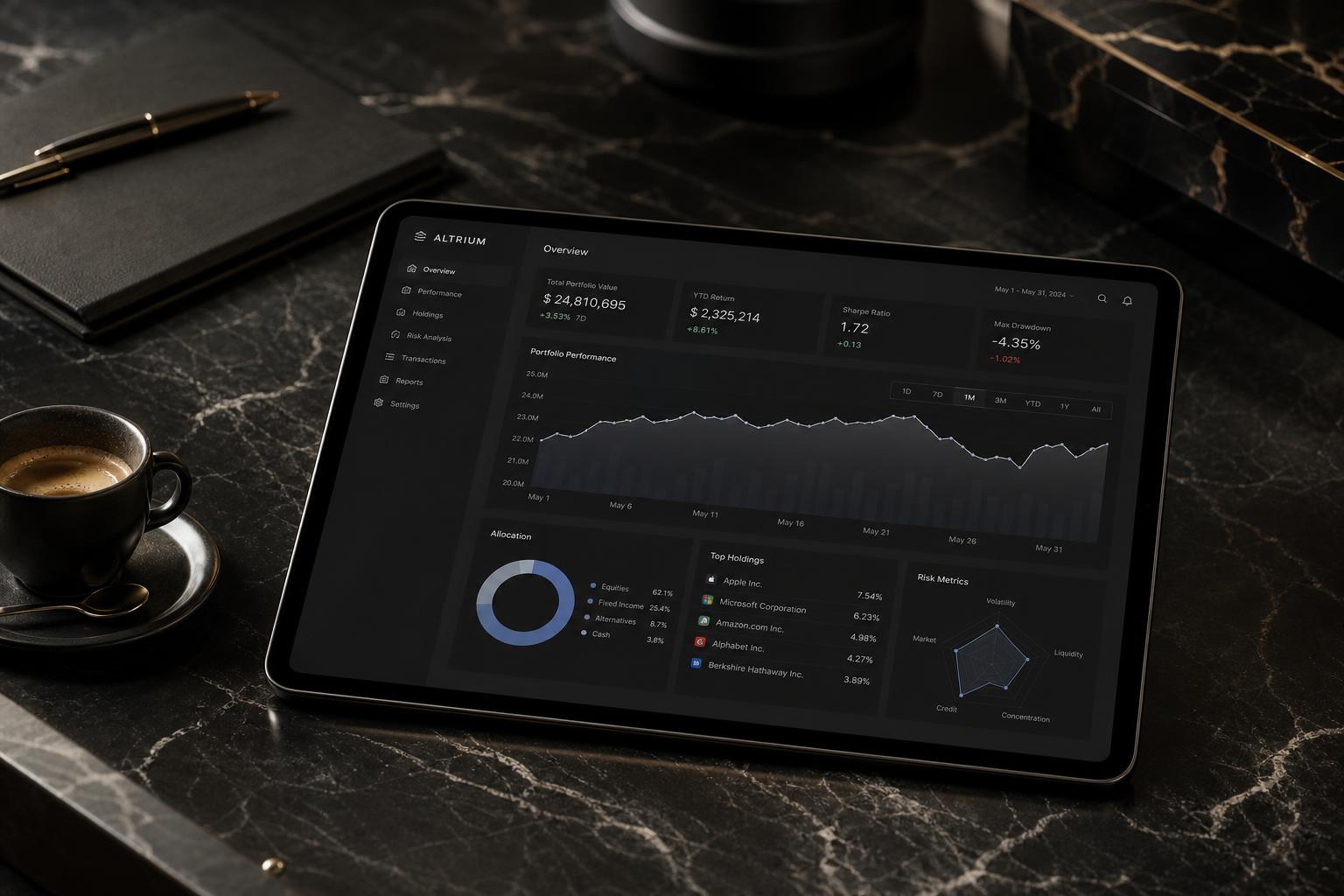
There is a figure sitting quietly at the bottom of your annual Airbnb payout summary that most luxury operators have never actually stopped to calculate. Not the percentage. The percentage sounds almost reasonable — 3%, barely worth a second look when you first encounter it. The number I'm talking about is what that percentage becomes when you multiply it across twelve months of high-value bookings.
For a property generating a million dollars a year in gross rental revenue, that 3% is $30,000. For a property doing two million, it is $60,000. For a portfolio of ten luxury properties generating a combined eight million dollars annually, it is $240,000. Gone. Every year. Paid to a platform that, in exchange for that $240,000, owns your guest relationships, controls the algorithm that determines your search visibility, and reserves the right to change its fee structure, its review policies, or its content guidelines at any point, on any timeline, for any reason — with no obligation to warn you in advance.
Run that number. Sit with it for a moment. Then recognize that $240,000 is only the beginning of the actual cost.
The Honest Accounting Most Operators Never Do
The real cost of OTA dependency is not 3%. It has never been 3%. The commission line is simply the most visible entry in what is actually a much longer ledger, and focusing on it exclusively is a bit like evaluating the cost of a business lease by looking only at the first month's rent.
The guest-side service fee — which Airbnb charges your guests on top of your nightly rate, typically between 14% and 16% — does not appear on your statement at all. It is invisible to you as an operator. But it is very much visible to your guests, who see a total booking cost that can be 15% to 20% higher than your listed rate. At the ultra-luxury end of the market, where a week-long booking over Aspen Christmas or Cabo New Year's might carry a gross platform total of $180,000 or more, that service fee represents a meaningful distortion of perceived value. Your guests are paying significantly more than you are receiving. The gap is going to Airbnb.
Then there is the lifetime value calculation — the one almost nobody runs honestly. When a family books your Turks and Caicos estate for the first time through Airbnb and has an extraordinary experience, they belong to Airbnb. Their data belongs to Airbnb. The next time they search for a luxury villa rental, Airbnb's algorithm will surface options — yours and seventeen others — and the family will make their decision based on whatever the platform shows them that day. Your property may or may not appear prominently. You have no ability to reach them proactively. You cannot offer them a private early-access window for the same week next year. You cannot send a personal note from the property manager who welcomed them at arrival. You have no mechanism whatsoever for turning a one-time booking into a lifetime relationship without routing every touchpoint through a system that has no incentive to build loyalty to you specifically.
A guest who stays at your Malibu estate once and spends $45,000 on that booking has a lifetime value — if you can cultivate the relationship — that realistically extends to $150,000 or $200,000 over three or four stays, plus referrals to their network. On the platform, they are worth $45,000 minus 3%. That is the entire relationship. The foregone lifetime value of even a handful of guests like this, across a year, dwarfs the nominal commission.
"I finally did the full accounting two years ago," says one operator managing a portfolio of five luxury villas across Cabo and the Riviera Maya. "When I added up actual commissions, the platform service fees our guests were absorbing, and a conservative estimate of the repeat bookings we never captured because we had no way to reach past guests — the real cost was closer to 14% of gross revenue. Not 3%. I'd been thinking about this completely wrong."
Platform Risk: The Cost That Doesn't Show Up Until It Does
There is one more entry in the honest accounting that is easy to dismiss until it isn't — platform risk.
Airbnb and similar OTAs are private companies. Their policies, their fee structures, and their algorithmic preferences are their own business decisions, made in service of their own financial interests, with no particular obligation to align with yours. This is not a criticism. It is simply an accurate description of the relationship.
In 2019, Airbnb implemented a policy change that significantly reduced search visibility for properties that declined to enable Instant Book. In 2020, its extenuating circumstances policy allowed guests to cancel non-refundable bookings without penalty in ways that cost operators — particularly luxury operators with long-horizon peak season bookings — significant revenue. In 2022, a wave of algorithm changes deprioritized newer listings and certain property types in ways that demonstrably shifted booking volume toward platform-preferred categories.
Each of these changes affected individual operators with no warning, no recourse, and no compensation. Operators who had built their entire business on platform visibility absorbed the consequences. Operators who had diversified their booking channels had somewhere else to stand.
One property manager overseeing a $3.2 million estate in the Hamptons described the moment clearly: "We had a peak Fourth of July week — historically our most valuable booking of the year — sitting open three weeks out because our ranking had dropped after an algorithm update. We had no direct channel, no email list, no way to reach anyone. We ended up discounting the week by 20% just to move it through the platform. That was the week I decided we needed to build something we owned."
They built a direct booking website the following winter. That same Fourth of July week the next year was booked direct, at full rate, four months in advance, by a repeat guest from the prior summer who had found them through organic search.
The Compounding Math of Shifting Your Booking Mix
The answer to platform dependency is not to abandon Airbnb. That would be a different kind of mistake. The platforms remain valuable distribution channels — particularly for reaching new guests who have not yet encountered your property through any other means. The answer is to build a direct booking presence in parallel and to systematically, deliberately shift your booking mix toward channels you own.
The math of this shift compounds in a way that is difficult to fully appreciate until you see it in your own numbers.
Consider a property generating $1.5 million annually, currently 100% platform-dependent at a blended effective cost — accounting for commissions, lifetime value loss, and platform risk — of approximately 12% of gross revenue. The true cost of platform dependency: $180,000 per year.
Year one of building a direct booking channel: the property captures 15% of bookings direct. The commission savings on that 15% alone are roughly $6,750 at the nominal 3% rate — but the lifetime value captured from those direct guests, the repeat bookings that begin to materialize in year two, and the CRM infrastructure that now exists and compounds in value are worth multiples of that figure.
By year three, operators who execute this transition seriously typically report direct booking shares of 35% to 50% of total revenue. At that point, the annual commission savings alone often exceed the entire cost of the direct booking infrastructure. And the guest list — the owned database of names, preferences, travel patterns, and relationships — has become a genuine business asset that exists entirely independent of any platform.
A property management company operating eight luxury estates across Aspen, Cabo, and Tuscany undertook exactly this transition beginning in early 2022. Before the transition, their direct booking rate was under 5%. Three years later, 47% of their total revenue came through direct channels. Their average direct booking ADR was 21% higher than equivalent OTA bookings — a premium they attributed primarily to the brand perception difference between a custom property website and a platform listing. Their annual commission outflow had dropped by over $90,000. And they had accumulated a direct guest database of more than 800 contacts, none of whom required a platform to reach.
They did not change a single property. They changed the infrastructure.
Every Percentage Point Compounds
The shift from platform dependency to direct booking ownership is not an event. It is a compounding process that rewards operators who begin it early and penalizes those who wait.
Every direct booking you capture this season is a relationship you own. Every guest in your CRM is a future booking that costs you nothing to acquire. Every week filled through a private guest window — sent to a past guest four months before the peak season opens — is a week that never touches a platform fee, never competes in an algorithm, and never lands in a guest's inbox alongside seventeen alternatives.
The operators building these systems now — in Aspen, in Cabo, in the Hamptons, in Tuscany, in every market where ultra-luxury short-term rental demand is real and growing — are not simply saving on commissions. They are building a fundamentally different kind of business. One where the relationship is the asset. One where the platform is a discovery channel, not a dependency. One where the number at the bottom of an Airbnb statement is interesting but not defining.
That number is still going to be there. The question is what percentage of your business it represents. And that percentage is entirely within your control.
Estate Presence builds the direct booking infrastructure that luxury and ultra-luxury operators need to own their guest relationships and reduce their platform dependency — custom websites, guest CRM, SEO, and complete direct channel management. If you're ready to run the real numbers, schedule a strategy call.